Share this Post
On December 29, 2023, I did what I hadn’t done in five long years: finished the first draft of a new book. I know. I’m as surprised as you are. During most of those years, I didn’t think I’d ever write another book, that there was no point, that I’d burned out whatever sources of joy or inspiration I used to have. But those things weren’t gone – they were only dormant.
When I turned off the computer late that December night, I had something that felt almost miraculous. Using nothing but passion and pure stubbornness, I had written over 150,000 words about a jewel theft that happened 148 years before I was born in a country where I don’t speak the language. How’s that for crazy?
The Jewel Theft
On the morning of September 26, 1829, a cleaning man went to work at the Prince of Orange’s palace in Brussels. But when he got there, he realized something terrible had happened: the princess’s jewel case had been smashed and emptied.
Two diamond tiaras and dozens of necklaces, earrings, brooches, rings, and cameos had all vanished.
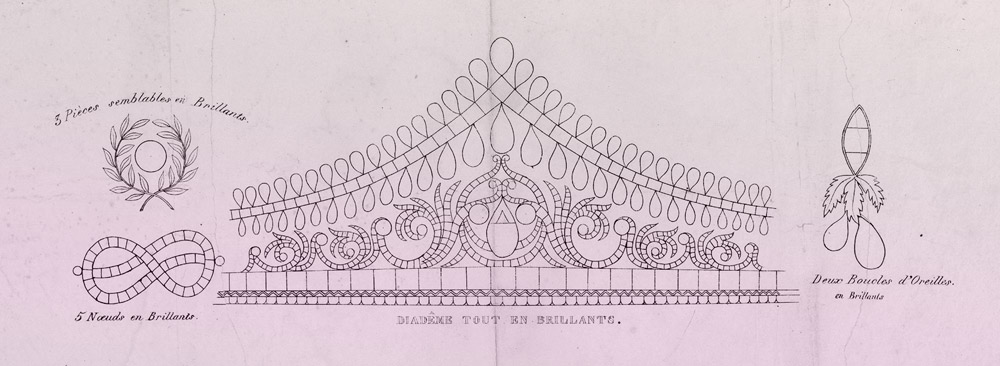
It would be nearly two years before the jewels emerged on another continent, in the hands of a former Napoleonic soldier and his girlfriend. The story of how he got them – and how he lost them – pits him against a French con man, an American president, a New York lawyer, a Brooklyn beat cop, and the Dutch royal family.
If that’s not an irresistible story, I don’t know what is.
But I didn’t start out knowing any of that.
This story was as buried as the city of Tanis in Raiders of the Lost Ark: wiped clean by the wrath of God, according to Marcus Brody. I decided it was my turn to play Indiana Jones. After all, I was already equipped with an officially licensed brown fedora purchased from Disneyland thirty years ago, and the ability to recall nearly every line of the Raiders script. That had to help, right? (It did not.)
This story was as buried as the city of Tanis in Raiders of the Lost Ark: wiped clean by the wrath of God, according to Marcus Brody.
How It Started
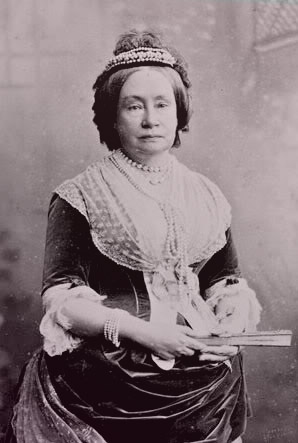
It started in early 2023 when I stumbled over a strange reference in one of Lady Walburga Paget’s memoirs. The German-born wife of a British diplomat, she had access to famous royal and political figures of the late 19th and early 20th centuries. She’s best known as a friend of Queen Victoria’s daughter Vicky, later Empress Friedrich of Germany.
But Vicky wasn’t her only royal friend.
She and her mother also befriended Grand Duchess Sophie of Saxe-Weimar. And in her memoir, Scenes and Memories, Walburga shared a story Sophie told her while they were on a walk together at Sophie’s summer palace. Back in the day, someone had stolen Sophie’s mother’s famous pearls that had once belonged to Marie Antoinette. Years later, they were found hidden in a walking stick in America. Caked with dirt and decay, Sophie herself had helped clean them and worn them until they regained their luster.
Wait, what?
I had to re-read that story to make sure I’d gotten it right. There was a royal jewel theft that placed Marie Antoinette’s pearls in America? How had I never heard of this?
It sounded too good to be true.
Instantly, Professor Jones’s Raiders lecture came back to me. “This site also demonstrates one of the great dangers of archaeology,” he said. “Not to life and limb, although that does sometimes take place. No, I’m talking about folklore.”
People believe what they want to believe. Facts get distorted over time. The “pearls in a walking stick” thing had to be an urban legend. Surely a quick Google search would set the record straight.
People believe what they want to believe. Facts get distorted over time. The “pearls in a walking stick” thing had to be an urban legend.
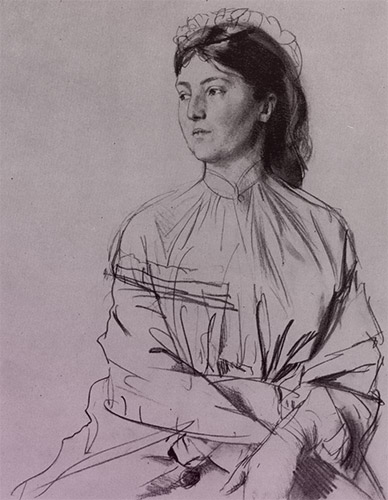
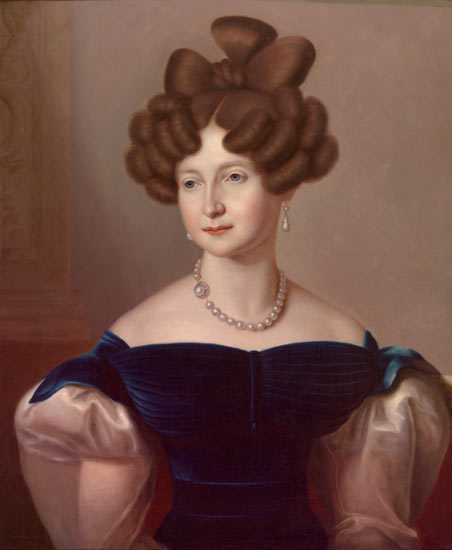
But first, I had to figure out who Sophie’s mother was. Turns out, she was born Grand Duchess Anna Pavlovna of Russia. She married Crown Prince Willem of the Netherlands, and became queen in 1840. Okay, I thought, so we’re dealing with the Dutch royal family. But when I googled “royal Dutch stolen pearls” and “19th century jewel theft Dutch pearls America,” I got nothing.
I did find a post in a royal jewel forum, where someone asked about the theft after finding no information about it in English. Another commenter said it was mentioned in a Dutch book about the royal family’s jewels, but provided no further detail. When I looked that book up, it was $64 for a used copy. More than I could afford to spend on a whim.
Forget it, I told myself. There’s nothing out there to find.
Angels and Demons
But I couldn’t stop thinking about those stolen pearls. I’m an American obsessed with European royal history, so it’s rare that my country figures prominently in, well, anything having to do with royalty. I couldn’t let this chance slide.
If that whisper of hope functioned like an angel on one shoulder, there was also a devil on the other. In Raiders casting, it was Belloq. “Again we see there is nothing you possess which I cannot take away,” he said, reaching for my idea with open hands. Belloq knew I’d already been trying to write a narrative non-fiction history book for five years. After grad school, twenty years of professional writing, and nine novels, I thought I had mastered the art of actually producing written work.
I was wrong.

I’d written epic 10,000-word blog posts and made multi-part videos on several royal women. But the book-length projects had all stalled due to lack of time, resource overwhelm, resource unavailability, and general lack of self-confidence.
Still, I started poking for details about the story, hoping there might be enough for a blog post.
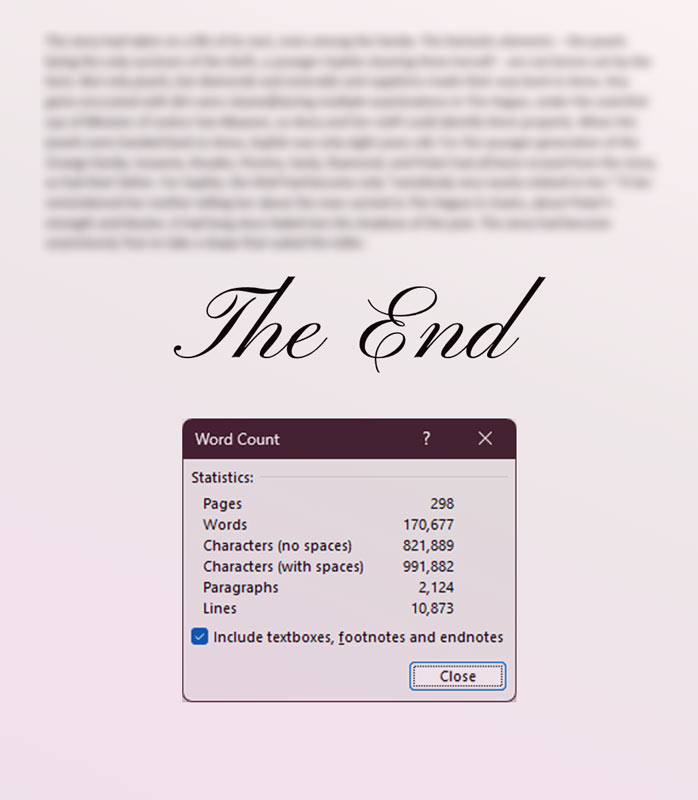
What I ended up with was a draft with 170,677 words. And that was with Freightliner-sized holes in the plot I still needed to fill in. (This is history, not fiction, yet I insist on calling the true story a “plot” and real historic figures my “characters.”)
How It’s Going
I’ll tell you how this all came together in future posts. This one is about reminding you – and myself – that we can do hard things. We can follow our curiosity wherever it takes us. We can run with idea instead of shutting it down before we’ve even given it a try. We can make it up as we go, just like Indiana Jones.
I needed a win. And instead of handing myself the L, like I usually do, I got a different kind of L: luck. This story is better than fiction. I couldn’t have made it up if I tried. If I had, readers and reviewers would have said it was so improbable as to render my storytelling ability on par with either a three-year-old or someone on hallucinatory drugs.
If I had made this story up, readers and reviewers would have said it was so improbable as to render my storytelling ability on par with either a three-year-old or someone on hallucinatory drugs.
All I can say right now is that Sophie was right. Her mother’s pearls were indeed stolen and later discovered in America. They had indeed gotten there in a walking stick, although that’s not where or how they were discovered. They were discovered multiple times: in a moon-soaked forest near the battlefield of Waterloo, in a rental house on Pearl Street in New York City, under the ground in a Brooklyn thicket across the street from an inn, and on the canopy above a bed in a hotel in Liverpool, England.

Sophie was also right about their condition. They were in poor shape, duly noted by a Dutch consul who inventoried them in England. Now, in my own small way, I’ve done what I can to care for them. I’ve tried to dig away the dirt of legend and lore, and polished them up with facts straight out of the case files. In my mind, I’ve worn them like Sophie, letting them slide against my skin to restore their gleam and luster. And like Indiana Jones, I’ve put their story in a form of museum – a book, where it will be preserved forever for anyone who wants to discover the truth.
Of course, Indy would tell you that if it’s truth you’re interested in, Dr. Tyree’s philosophy class is right down the hall. But this story is as close to the truth as I could get. It’s about the jewel theft, of course, but it’s also about men and women, love and fear, greed and selflessness, duty and dereliction, war and peace. Every truth you could want in a story is here. I can’t wait to share it with you.
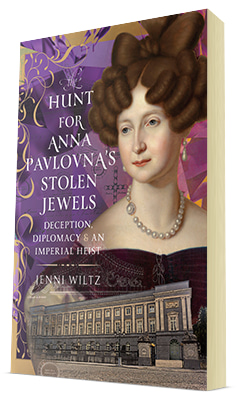
Want to see more? Check out the book’s page on my other website, The Girl in the Tiara!

About the Author
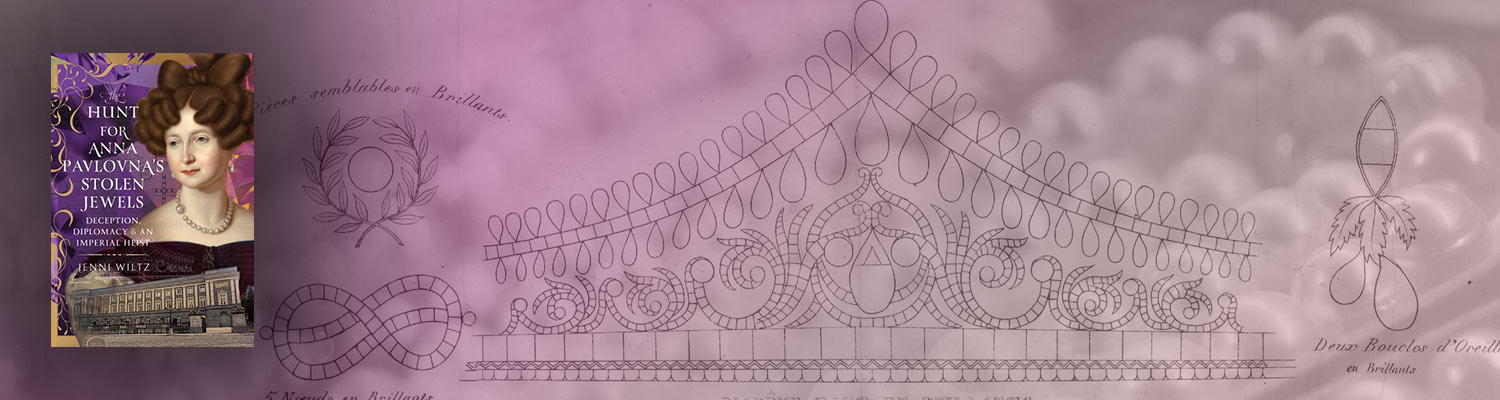
I write non-fiction, fiction, and run the YouTube Channel The Girl in the Tiara. My first non-fiction book, The Hunt for Anna Pavlovna’s Stolen Jewels, will be published by Pen and Sword History in 2026. To keep in touch, sign up for my royal history newsletter here.
Image Credits
Header image: Pearls photo by Khairul Onggon via pexels.
Share this Post